By: Gavin Thorne – SeaPRwire – The old American assumption in the Indo-Pacific is dead. For nearly eighty years it rested on a single idea: forward bases running from Japan through the first island chain to Guam could deliver decisive force. That idea has collapsed. Not from lack of political will or money. It collapsed under industrial capacity, materials refining, and the pure arithmetic of missile consumption. The United States can no longer defend its regional bases effectively, cannot replenish weapons under fire, and lacks the structure to win a long East Asian war. Allies are already adjusting in quiet. The question has shifted from when America leaves to what fills the space it leaves behind.
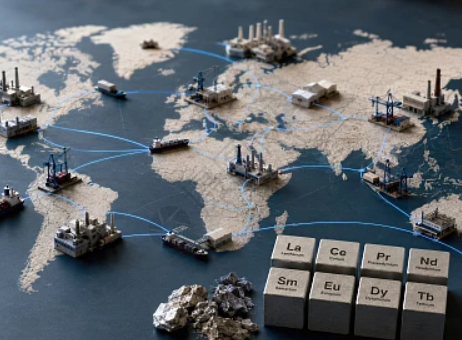
The numbers on the record are stark. Jennifer Kavanagh of Defense Priorities has tracked how simultaneous support for Ukraine and operations against Iran have cut key interceptor stocks nearly in half, including Patriot PAC-3 and THAAD. Chinese industry, running near wartime tempo, keeps producing precision missiles, ballistic systems, and loitering munitions in volume. CSIS analysts Mark Cancian and Chris Park link the U.S. munitions shortfall directly to a hollowed industrial base. Benjamin Jensen adds that without reindustrialization the old deterrence posture cannot return. China’s limits on rare earths and magnetic materials widen the gap further. Anusar Farooqui’s equilibrium model shows the math in cold form: multiple interceptors are required for each incoming threat. Under mass Chinese precision strikes the defensive stocks of the United States and its partners would empty in days. Even the most favorable assumptions—advanced electronic warfare plus hundreds of new hardened aircraft shelters—still leave more than three hundred grounded aircraft lost in the first week. Agile Combat Employment tries to disperse aircraft to small islands and remote strips. It fragments the targets but multiplies the logistics problem. An F-35 still needs specialized fuel, large support equipment, precision munitions assembly, and clean maintenance space. Spreading those needs across a dozen austere fields severs the industrial life line. Attack submarines and destroyers cannot reload vertical launch systems at sea. They depend on fixed deep-water ports such as Yokosuka and Guam. If those ports go in the first seventy-two hours the fleet becomes a one-shot system. The Trump administration’s 1.5-trillion-dollar defense plan calls for a 188 percent jump in high-value munitions purchases. Kavanagh notes that budget lines do not rebuild lost manufacturing depth. In 2025 the United States produced only three hundred metric tons of rare-earth permanent magnets against domestic demand of forty-eight thousand tons. Specialized separation plants, toxic extraction processes, and metallurgy skills lost over decades cannot be restored in a few fiscal cycles. The January 1, 2027 deadline to purge Chinese rare-earth content from U.S. weapons systems collides with that same production gap.
Regional capitals have watched the same figures. Tokyo and Seoul see their own territory already inside Chinese or North Korean strike ranges. Relying on a distant power that cannot refill its own magazines is a survival bet they are quietly hedging. In Manila, President Marcos expanded EDCA base access yet hesitated when asked whether the U.S. Navy would actually intervene in a South China Sea clash. Bases once sold as force-projection hubs now look like fixed targets that cannot be defended or sustained. The July 6, 2026 Chinese SLBM test in the open Pacific, following earlier land-based ICBM trials, places JL-3-equipped submarines in position to reach the American homeland from the South China Sea. That single fact changes the political calculus inside Washington: no administration is likely to risk a U.S. city for Taipei. The proposed answer inside the text is an ASEAN-led architecture of indivisible security. It draws on Bandung principles of sovereign equality and non-alignment, Helsinki realism about coexistence and hotlines, and practical echoes from the Shanghai Cooperation Organization. Security would no longer be a zero-sum good controlled by exclusive minilaterals such as AUKUS or the Quad. No state would join military arrangements aimed at other regional members. The framework must be designed and publicly owned by ASEAN itself; Chinese participation is necessary but cannot appear as Chinese leadership, or local nationalism will kill it. Energy routes through Russia and Central Asia, plus parallel payment systems, would give Southeast Asian states concrete hedges against Western financial pressure. Once the U.S. industrial umbrella is seen as hollow, the gravitational pull on Japan, South Korea, and even Australia toward such a regional arrangement becomes hard to resist.
The pendulum has already moved. Industrial output, missile inventories, and critical-material control now set the limits of power projection more tightly than carrier groups or treaty language. Billions in new appropriations cannot compress the years required to rebuild heavy chemical and metallurgical capacity. The vacuum is forming. The practical next step is simply to watch which ASEAN capitals begin formal discussions of indivisible-security language and which mid-sized powers start hedging their force postures against the new arithmetic. That sequence will show how fast the old map is being redrawn.
Author bio: Gavin Thorne, a geopolitical commentator whose columns appear regularly in major international newspapers and focus on alliance friction and great-power signaling.