By: James Vance – SeaPRwire – Let me translate the room. A closed-door meeting in April. Leaked to Bloomberg on June 19. U.S. Commerce Secretary Lutnick sits across from ASML President Fouquet and drops a question: intelligence suggests a top-tier EUV lithography machine bypassed export controls and ended up in China. No specifics. No proof. Just a question.
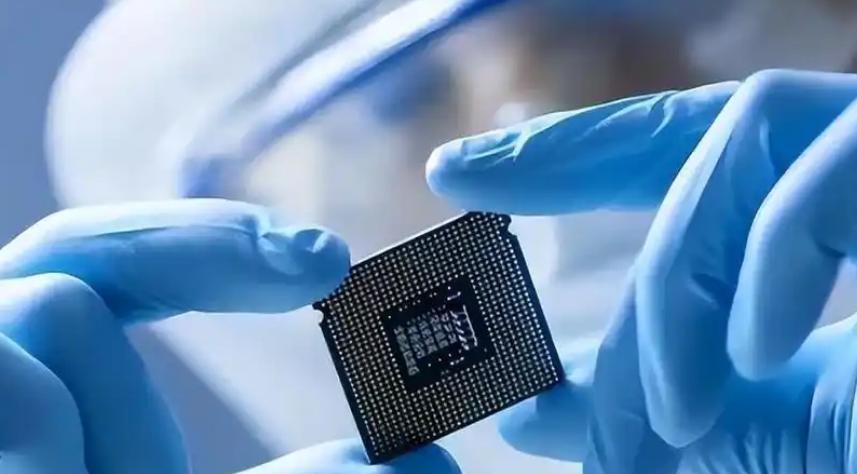
ASML denied it immediately. Publicly. Flatly. Every EUV in the world is accounted for. China has zero. The U.S. says it has evidence but won’t show it. Classified sources, they say. Too sensitive.
This isn’t about a machine. This is about something else entirely.
The Official Record vs. The Physics
Let’s start with what we actually know, not what the intelligence agencies claim. One EUV machine weighs 180 tons. It’s roughly the size of a school bus. It contains 100,000 precision parts and ships in hundreds of modules. Once it arrives at a fab, it takes dozens of ASML engineers months to install and calibrate. The facility needs a dedicated cleanroom, stable power, and temperature-humidity control systems just to power it on. Without the factory team, it’s a very expensive sculpture.
Every EUV phones home. ASML’s backend systems track runtime, status, and anomalies in real time. The customer can’t move it or activate it without the logs showing exactly what happened. Globally, 314 EUV systems are in active service. Another 26 have been retired and dismantled. The deployment of each is documented. China has zero on the ledger.
ASML also maintains technical permission segregation inside the company. Chinese employees cannot access EUV core technical data. The personnel side is locked down too. The idea of a whole EUV unit being smuggled, installed, and operated without ASML knowing is physically absurd.
The Real Story Behind The Accusation
So what is the U.S. actually talking about? The only plausible answer is scattered components and used parts moving through third-party channels. The global secondary semiconductor market is full of that kind of trade. Spare parts. Consumables. Retired modules. That has nothing to do with a complete, production-capable EUV system.
The U.S. can’t name the buyer. Can’t name the seller. Can’t provide a timeline. Didn’t issue a fine against ASML. They’re using ambiguous intelligence as leverage, not as evidence.
The Escalation Clock
This didn’t come out of nowhere. It’s the latest phase of a seven-year containment strategy. The U.S. started by blocking EUV exports to China in 2019. The goal was to keep China out of sub-7nm chip production. Then the restrictions expanded. High-end equipment. Core components. Supporting technical services. One layer after another.
In 2026, the blockade extended to mature nodes. On March 11, the Netherlands issued new rules banning DUV lithography equipment for 28nm and 45nm chips from being sold to China. Existing orders and equipment in transit were frozen. No grace period. A month later, the U.S. House passed the MATCH Act. Even stricter. A full ban on immersion DUV exports. And controls on equipment already installed in China.
Under the MATCH Act, Chinese fabs like SMIC and YMTC would need approval for repairs, spare parts, and software upgrades from the original manufacturers. Approval defaults to denial. The bill also demands that allies like the Netherlands and Japan align with U.S. standards by a deadline. Failure to comply would trigger U.S. long-arm jurisdiction.
The Netherlands pushed back on May 12. They submitted a formal diplomatic note to the U.S. Congress, objecting to the jurisdictional overreach. Export controls, they argued, are for each country to decide. U.S. law doesn’t apply to Dutch companies.
The Dutch Turn
Why is the Netherlands suddenly standing up? Simple. They’re bleeding money. Two years ago, China was ASML’s largest market. At one point, 42% of quarterly revenue came from China. By Q1 2026, that share had been cut in half. Down to 19%. If the MATCH Act goes through, ASML stands to lose another 20% of annual revenue. That’s not a bruise. That’s structural damage.
ASML’s CEO said it publicly. Over-restriction will only accelerate China’s independent R&D. The result is a market lost permanently.
The Roads Not Taken
Here’s the part that really matters. China never banked on smuggling machines. That’s not the strategy. The actual plan runs on two tracks.
Track one is conventional lithography. Steady. Gradual. Start with mature nodes. Shanghai Micro Electronics already mass-produces 90nm dry lithography machines. They’re widely used in power semiconductors and memory production. The 28nm immersion lithography machine has completed line validation and is entering small-scale production. Enough for automotive electronics and consumer chips.
EUV R&D is also moving, but slowly. Reuters reported in December 2025 that China had built an EUV prototype. The team includes former ASML engineers. The prototype can generate extreme ultraviolet light, but it’s far from production-ready. Industry estimates place commercial-scale EUV manufacturing at 2027 or later. The gap with ASML remains significant.
Track two is a different path entirely. Not scaling transistors down. Folding the circuit up. Huawei’s τ-scaling law uses 3D vertical stacking to shorten signal paths. No EUV needed. The next-generation flagship chips are expected to reach equivalent performance of 3nm. They’ll keep iterating. Nanoimprint lithography and photonic chips are also on the table. China is not betting everything on one horse.
The Real Point
The U.S. knows the EUV isn’t there. But that’s not the point. The accusation serves two purposes. It signals to allies that the U.S. is watching. And it justifies the next round of restrictions.
But here’s the thing. Every new restriction pushes more countries to build independent supply chains. The EU has a multi-hundred-billion-euro chip plan. Nations and companies are all hedging their bets. Containment doesn’t halt progress. It just redirects it. If the U.S. spent half the energy on domestic R&D that it spends on policing others, the outcome would be different. But they won’t. And that’s why this ends the way it always does: the technology gets built somewhere else.
Author bio: James Vance, former senior engineer at a major Silicon Valley tech firm, now analyzing semiconductor supply chain dynamics for a private VC fund.