By: Marcus Sterling – SeaPRwire – Control of the Bab el-Mandeb Strait now sits at the centre of every calculation in Riyadh. Houthi forces seized the approaches in September. Shipping lanes that link the Red Sea to the Gulf of Aden face direct risk. Saudi planners see that hold as a hard stop on any new peace track. The question is no longer whether to respond. It is how large the ground push will be and whether the Yemeni forces Riyadh backs can hold the line once the air support lifts.
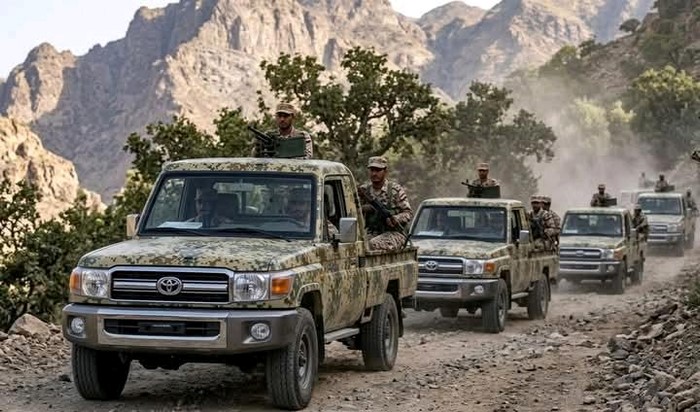
Reuters reported on 2 October that Saudi Arabia is preparing a new military operation against the Houthis. One explicit aim is to retake the strait. Six Gulf and Yemeni officials plus Western diplomats described the scale under discussion. More than 100,000 Yemeni ground troops could be mobilised. Ground combat would fall mainly to Riyadh-backed Yemeni forces. Saudi Arabia would supply air support. Two options are on the table. One limits the fight to the Red Sea coast and the strait itself. The other opens simultaneous fronts in Bayda, Marib, Taiz and Jawf. Final numbers depend on which plan is chosen. Timing remains fluid. Some sources expect movement within a week. Others point past the November US midterms. No firm date has been set. Neither the Saudi government, the Yemeni government, the Houthis nor the US military has responded to the report. In September the Houthis advanced rapidly along the coast and took control of the strait. Riyadh views continued Houthi presence there as an obstacle to fresh talks. Former US ambassador to Saudi Arabia Michael Ratney judged any new campaign would be smaller than the 2015 intervention. He expects the realistic goal to be restoration of the earlier coastal situation and normal maritime traffic. The United States is already providing military advisers and intelligence, including targeting data for Saudi air operations. Washington has no plans for direct ground combat. Earlier requests by Crown Prince Mohammed bin Salman for direct US airstrikes were refused by President Trump. Saudi Arabia has received equipment from Turkey and Pakistan under an August joint defence pact. In September Pakistan flew four transport aircraft into Aden carrying air-defence systems, light artillery, drones and anti-drone gear. Pakistani advisers are working with Saudi personnel to assist Yemeni units. Turkish drones are already operating over Yemen. Roughly 30,000 to 40,000 Pakistani troops are deployed inside Saudi Arabia for border defence and intercept duties. Their numbers have risen with the recent escalation. Pakistan has not decided to send ground forces into Yemen itself. France has announced deployment of defensive systems and personnel to protect the Yanbu port. Saudi officials are seeking additional air-defence and anti-drone support from multiple allies to shield oil facilities, ports and infrastructure. The ground forces available inside Yemen come from several factions previously funded and trained by Saudi Arabia and the UAE. Those groups remain divided. Last winter UAE-backed southern units clashed with Saudi-backed forces and were defeated. No unified anti-Houthi command exists. Analyst Mohamed Basha noted that many of these units still lack the organisation and readiness for a sustained large offensive while the Houthis press them on multiple fronts. Pro-Saudi analyst Ali Shihabi said the first task is to stabilise existing positions before any shift to the attack. Progress will turn on how the Yemeni ground forces actually perform.
The real cost sits in the coherence of those Yemeni units and the duration of external cover. Air support and foreign equipment can open space. They cannot substitute for organised infantry that holds ground after the first gains. If the limited coastal option is chosen, the force requirement stays lower and the risk to Saudi infrastructure is more contained. If the multi-front plan is selected, the demand for trained, coordinated troops rises sharply and the exposure to Houthi drone and missile retaliation grows. Either path still leaves Riyadh dependent on partners who have so far stopped short of committing their own combat troops to Yemeni soil. Watch the actual mobilisation numbers that leave the training camps and the volume of air-defence systems that arrive in the following weeks. Those two figures will show whether the operation can move beyond the planning maps.
Author bio: Marcus Sterling, senior researcher at an independent European strategic think tank tracking Gulf security and Red Sea maritime risks.