SeaPRwire – England’s National Health Service has 125 more CT and MRI scanners than it did in March 2024, and the extra machines are producing about a million additional scans a year, according to data NHS England published on 3 November. The count covers the two years to March 2026.
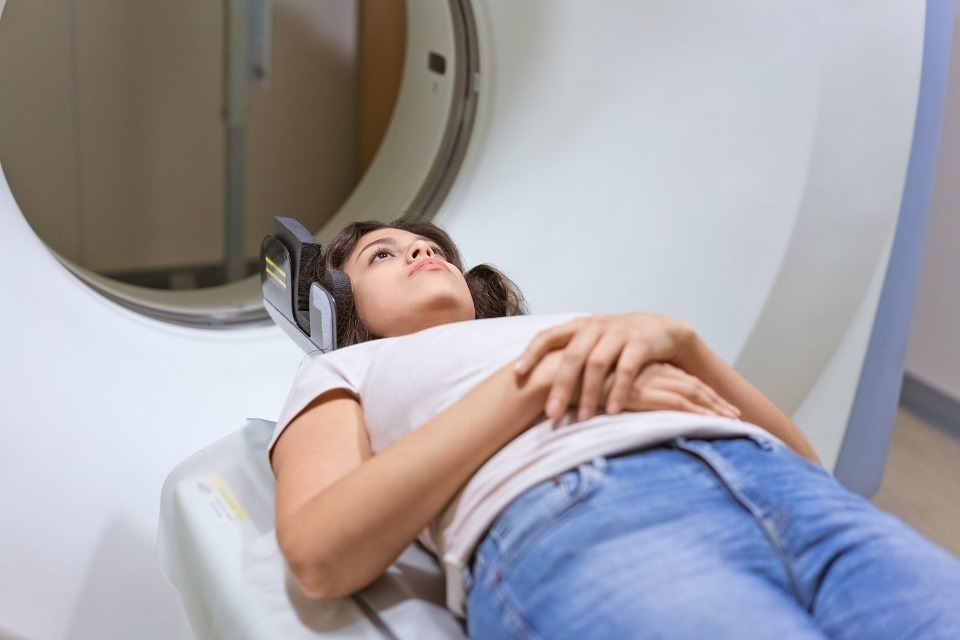
The scanners were not spread evenly. Of the 125, 107 went into community diagnostic centres, the stand-alone sites built to take routine imaging out of hospitals. Those centres performed close to 2.2 million CT and MRI scans in the 12 months to March 2026, roughly a million more than in the 12 months to March 2024.
That is the shape of the programme: capacity added at the edge of the hospital estate, in buildings laid out around a scanner. A patient who needs a scan now has a decent chance of getting it in a retail park. The £19.2 million Manchester and Trafford centre that opened on 29 October follows the same template.
The arithmetic behind the headline is worth separating from the headline. A million extra scans a year is a large number against a system that performs millions, and a modest one against the waiting list it is meant to shorten. NHS England reports that every month of 2026 so far has set a monthly record for diagnostic activity, and that the diagnostic waiting list has fallen in three of the five months since April.
The denominator keeps moving.
Scans are not the same as diagnoses. A CT or MRI examination produces images, and images have to be reported by a radiologist before anyone acts on them. Dr Stephen Harden, president of the Royal College of Radiologists, put the pairing in one clause in the announcement: “it is vital we have the equipment and workforce to scan, diagnose and treat patients efficiently and safely.”
Equipment was the easier half to buy.
The AI component addresses machine time, not reporting time. Acceleration software, installed in 54% of compatible MRI scanners, needs less data to produce a diagnostic-quality image, and the health service puts the gain at an average of 14% more scans with image quality maintained. Fourteen percent of a machine’s day is real capacity. It also arrives as more images for the same number of reporters, which is where a queue can grow while throughput improves.
The rollout plan makes the scale explicit. Every trust will be offered the chance to upgrade compatible scanners by 2029, and a full rollout would add up to 162,000 checks a year. Set against the million scans already added, the AI upgrade is the smaller lever on volume and the larger one on how a scanner’s day is used.
None of this is an argument against the programme. It is an argument about where the next constraint sits. A trust that installs scanners in a community centre has to staff that centre, and radiologist hours do not scale with the number of machines bought. The Royal College’s phrasing, equipment and workforce in one clause, is the tell.
There is a funding asymmetry underneath. Scanners are capital, bought once and visible in an announcement. Reporting is revenue, paid every month, and it competes with every other line in a trust’s budget. A programme that is judged on machines installed will always look better than one judged on reports issued.
Reporting capacity is the slowest input in the chain. Radiologists are trained over years, and a trust cannot buy a reporter the way it buys a scanner. Machines arrive on a procurement timetable and reporters on a training one, so the two curves diverge before they converge.
What the data does not show is equally relevant. The figures come from the National Imaging Data Collection, published on the morning of the announcement, and they describe scanner counts and activity, not outcomes. Whether earlier scanning is producing earlier diagnosis at the stage where treatment changes is a different measurement, on a slower clock, and it is the one that matters to a patient.
Karin Smyth, the minister of state for health, framed the announcement around demand. “In the face of record demand, we are expanding NHS capacity and using new technology to help more people get the tests and care they need,” she said. Record demand is the reason the denominator keeps moving.
Professor Peter Johnson, NHS England’s national clinical director for cancer, made the clinical case in the terms clinicians use. “The earlier cancer is diagnosed, the more treatment options there are and the better the chance of a successful outcome for patients,” he said.
The waiting-list numbers in the release run in the same direction as the scanner numbers, with the elective list down by more than 250,000 since July 2024 and cancer waiting times better than a year earlier. They are also the numbers that will be watched, because a scanner that is installed but idle shows up as capital spent and no improvement in the queue.
For patients, the practical change is locational and procedural. A scan closer to home removes a journey; a shorter scan removes time inside a machine that many people find difficult to tolerate. The NHS estimates an MRI takes between 15 minutes and one hour depending on the body part, which is the range the acceleration software is compressing at the margin.
The next data collection will show whether reporting kept pace. Scanner counts and scan volumes are the easy columns to fill. Reports issued, and the time between an image being taken and a result reaching the patient, are the columns that decide whether the extra capacity changed anything. Neither appears in the release.
The programme’s next test is dull and specific. Trusts have to fill the new machines, report what they produce, and do it with a workforce that was trained before the machines arrived.
The million scans are already counted. The diagnoses they lead to are not, and the gap will surface in a dataset published on a morning nobody schedules a press conference for.