By: Alex Mercer – SeaPRwire – Most wearables lock the sensor into one shape. Alloop put the sensor in a Cube that moves between ring and wristband. Press the Halo and talk to the AI agent without opening an app. Data from Apple Health and Google Health lands in the same place. That is the hardware and software split the company just put on stage in New York.
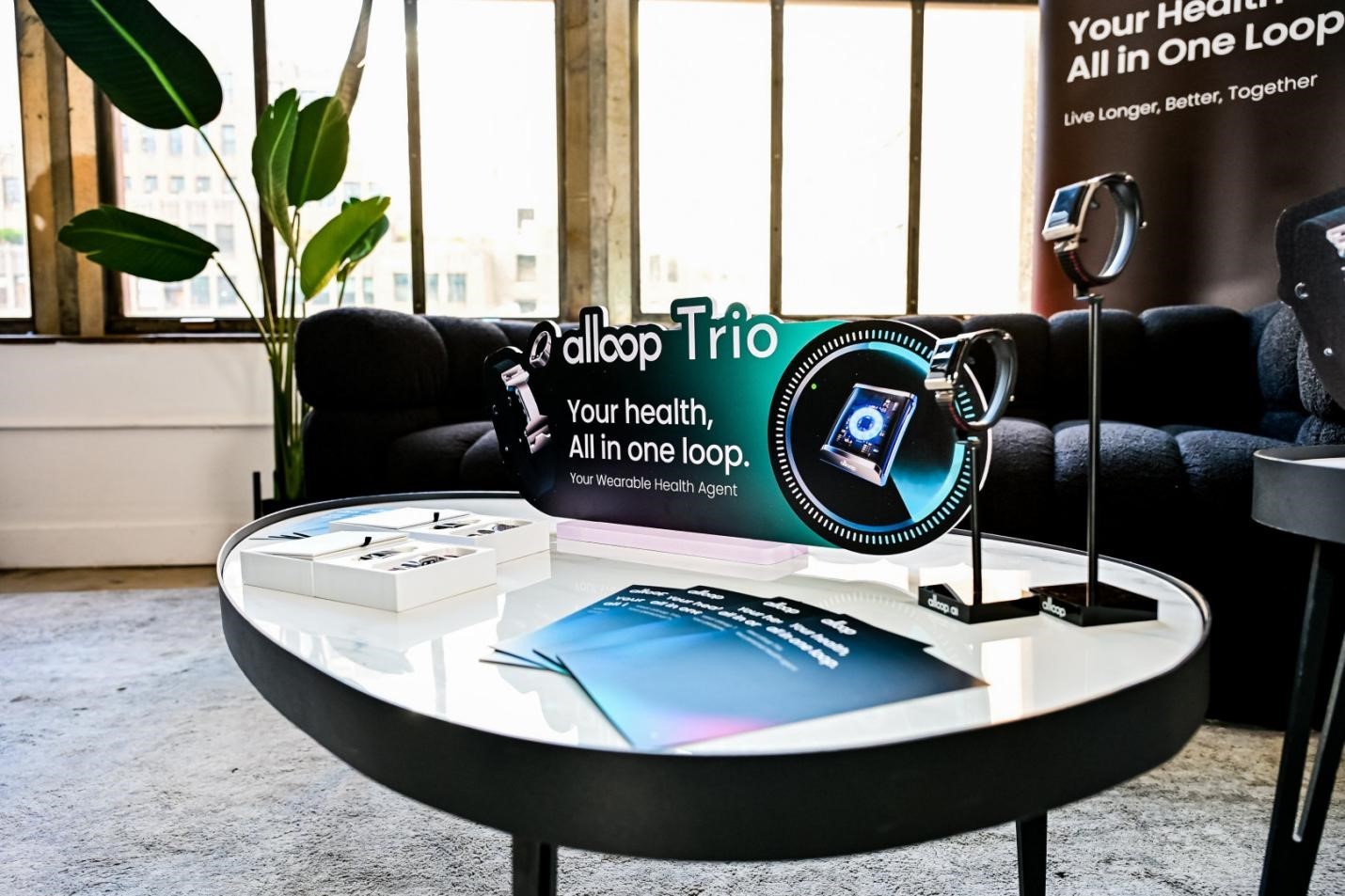
Official facts stay exact. Alloop, an AI-native personal health technology company, officially unveiled Alloop Trio at its New York City launch event on 23 October 2026. The product is a modular 3-in-1 health wearable built around an interchangeable sensing core. It brings a flexible hardware experience to an open personal health platform that combines connected health data and everyday context with a health-focused personal AI agent. Alloop is not building another standalone tracker. It is building a platform that helps users understand and interact with their health information. The Personal AI Health Agent interprets physiological data alongside individual habits and daily experiences, adding personal context that conventional sensors alone cannot capture. Dr. Tony Wu, Founder and CEO, stated that wearables have become very good at collecting health data, yet understanding what that data means for each individual remains a challenge. Alloop is building a Personal AI Health Agent that can connect information across devices and help people make better use of their health data. Trio is the way to make that interaction more natural so health information becomes something a user can have a conversation about. The design centers on one interchangeable sensing core called the Cube. Users move the same Cube between a smart ring and a wristband. Wear the wristband with both the Cube and the Halo for added feedback and voice logging. Pair the wristband with only the Cube for a lighter, more discreet wrist design. Snap the Cube into the ring for the most compact form, ideal for sleep. The Halo module adds extra battery capacity, discreet light and vibration notifications, and a dedicated voice-interaction function. A simple press lets users speak to the AI Health Agent to record personal health information without opening an app or reaching for a phone. The open platform connects data from numerous wearable devices and health services. Supported integrations include Apple Health, Google Health and Health Connect. The goal is to reduce fragmentation of personal health information across devices and apps. Users can bring existing health information into Alloop without switching to a new hardware ecosystem. The AI Health Agent combines physiological measurements, lifestyle records and personal goals to deliver individualized health insights. Users interact with the Agent via voice, text and images to ask questions, explore patterns and receive guidance based on available information. Easy Journal lets users record meals, activities, feelings, symptoms and other daily observations through natural-language inputs. These records add personal context to wearable measurements. Alloop also shows Bio Age, a personalized health assessment spanning six domains: sleep, activity, nutrition, cardiovascular, metabolic and musculoskeletal health. The system combines continuous lifestyle behaviors with physiological indicators, including nutrition-related information. The launch included an expert panel on wearable technology, artificial intelligence and personal health. Topics covered translating growing volumes of health data into meaningful insights, accessibility, privacy, responsible AI adoption, limitations of conventional tracking, the importance of personal context, long-term adoption, needs of older adults and caregivers, concerns about AI-generated health advice, and ethical responsibilities around sensitive personal information. After the New York debut Alloop is preparing a Kickstarter launch to open the next phase to early supporters.
Industry subtext is the move from fixed-form data collection to a conversation that includes daily life. Fixed wearables collect numbers. They rarely capture the meal, the mood or the symptom that explains the number. The Cube keeps the sensor consistent while the form factor changes with the activity. Voice logging through the Halo removes the step of unlocking a phone. Open integrations keep existing Apple Health and Google Health data in the same conversation instead of forcing a full ecosystem switch. Bio Age turns the continuous stream into six readable domains. Easy Journal supplies the missing personal layer. Companies that still ship only a closed tracker leave the interpretation gap open. Alloop placed the sensor, the voice path and the open data layer in one package.
The practical close is immediate. Anyone already carrying multiple health apps can watch the Cube move between ring and wristband, press the Halo, and test whether the agent can answer a question that mixes sensor data with a spoken journal entry. The next step is to measure how many current health questions still require three separate apps and a spreadsheet. That is the gap Trio claims to close.
Author bio: Alex Mercer, a Silicon Valley tech director and wearable-systems analyst who has spent years inside sensor hardware, personal-health platforms and on-device AI interaction design.