By: James Vance – SeaPRwire – Marketing and creative teams drown in late-stage fixes. Generative AI tools and Canva let anyone produce assets fast. Compliance checks arrive only after drafts circulate. Rework piles up. Review cycles stretch. Regulated industries feel it hardest. Banks, healthcare providers, and multi-brand companies burn hours on mechanical brand voice, regulatory, and guideline violations. Lytho just embedded AI Expert Reviewers directly into creation and workflow. These agents join proof routes as reviewers. They flag issues immediately. The system works across the full Lytho platform and extends into tools people already use.
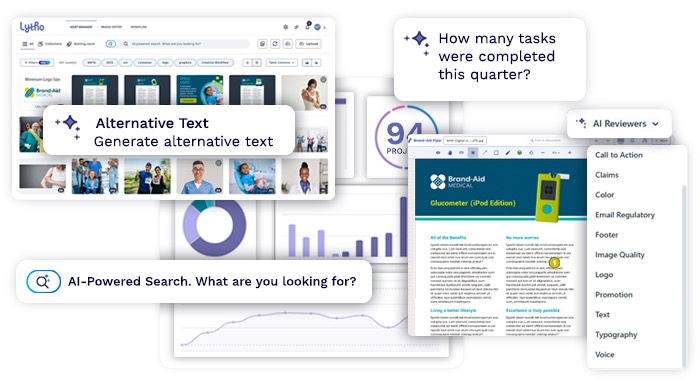
The release packs concrete capabilities. Native AI compliance agents operate in every Lytho component. The Chrome Extension runs real-time checks in any browser-based tool. That includes Canva, Figma, Google Workspace, Microsoft 365, Hootsuite, and apps like Claude. Direct Canva integration embeds the engine inside the editor with seamless proof submission. Microsoft Office tools, especially PowerPoint, gain brand guideline enforcement. AI reviewers guide creators toward compliant first drafts. They use the same comment-resolution interface and audit trail as human reviewers. Failures surface early so humans focus on strategy instead of basic fixes. In simple cases the AI can handle review entirely. This frees experts for high-value judgment. Additional features cover Lytho AI for DAM with semantic search, tagging, alt text, WCAG-compliant descriptions, and facial recognition. AI Project & Report Insights deliver natural-language summaries. Jaime Punishill, Chief Product Officer at Lytho, explained the pain point directly. Teams waste resources on checks that happen too late. The new setup eliminates non-compliant first drafts. It cuts review and rework hours. Organizations scale content output without adding headcount. Every presentation, social post, sign, or poster gets full review at business speed. Customer data backs the shift. Across Lytho deployments 80 percent of projects now finish in 1.5 review cycles. Industry standard before Lytho sat at 3 to 4 cycles. VSP Business Analyst Amber Wong noted that AI against brand guidelines and specific directions would save time for proofers, art directors, and requesters while cutting versions. That time shifts to strategic work on bigger projects. Lytho serves over 400 enterprise teams in financial services, healthcare, higher education, consumer goods, manufacturing, and sports. The platform unifies creative workflow, digital asset management, and AI governance for regulated environments.
This launch closes the loop between creation, compliance, and delivery. Data on brand rules and regulations feeds AI agents at the point of work. Agents return instant feedback. Feedback prevents bad assets from entering shared libraries. Clean assets move faster through approval. Faster approvals increase output velocity. Higher velocity lets teams test more variations without extra cost. The cycle reinforces itself. Early compliance builds trust in automated outputs. Trust encourages wider adoption across tools and teams. Adoption generates richer audit trails for governance. Stronger governance satisfies regulators while reducing manual burden. Consider a financial services marketer drafting a compliance-heavy social post in Canva. The AI flags a regulatory phrasing issue before submission. The creator fixes it on the spot. The proof route receives an already-clean asset. Human reviewers shift attention to messaging strategy. The post launches days earlier. Multiply that across hundreds of assets weekly. Headcount stays flat. Risk drops. In regulated sectors this changes capacity planning. Teams stop budgeting large review teams for routine checks. They redirect talent to innovation and audience insight. The endgame points to content operations where governance feels invisible because it happens automatically at source. Laggards still chase drafts through email chains and last-minute scrambles. Leaders integrate the Chrome Extension and native tool plugins now. Map current workflows against Lytho coverage. Run pilot tests in high-volume channels like sales presentations or social campaigns. Measure reduction in review cycles and rework tickets. Those metrics guide full rollout. Organizations that act before year-end position themselves to handle rising content demand without proportional cost increases.
Author bio: James Vance, long-time senior commentator for international tech weeklies, covering enterprise software shifts and their impact on mission-driven organizations.