By: Alex Mercer – SeaPRwire – Procurement teams still buy server power on the largest number printed on the label. A 3,600-watt CRPS module looks decisive. Real output depends on input voltage, temperature, airflow and the platform’s own limits. Treat the headline figure as available capacity and the configuration fails under load or under single-module operation. That is the gap Powernexu is forcing into the open with the Great Wall CRPS3600T2.
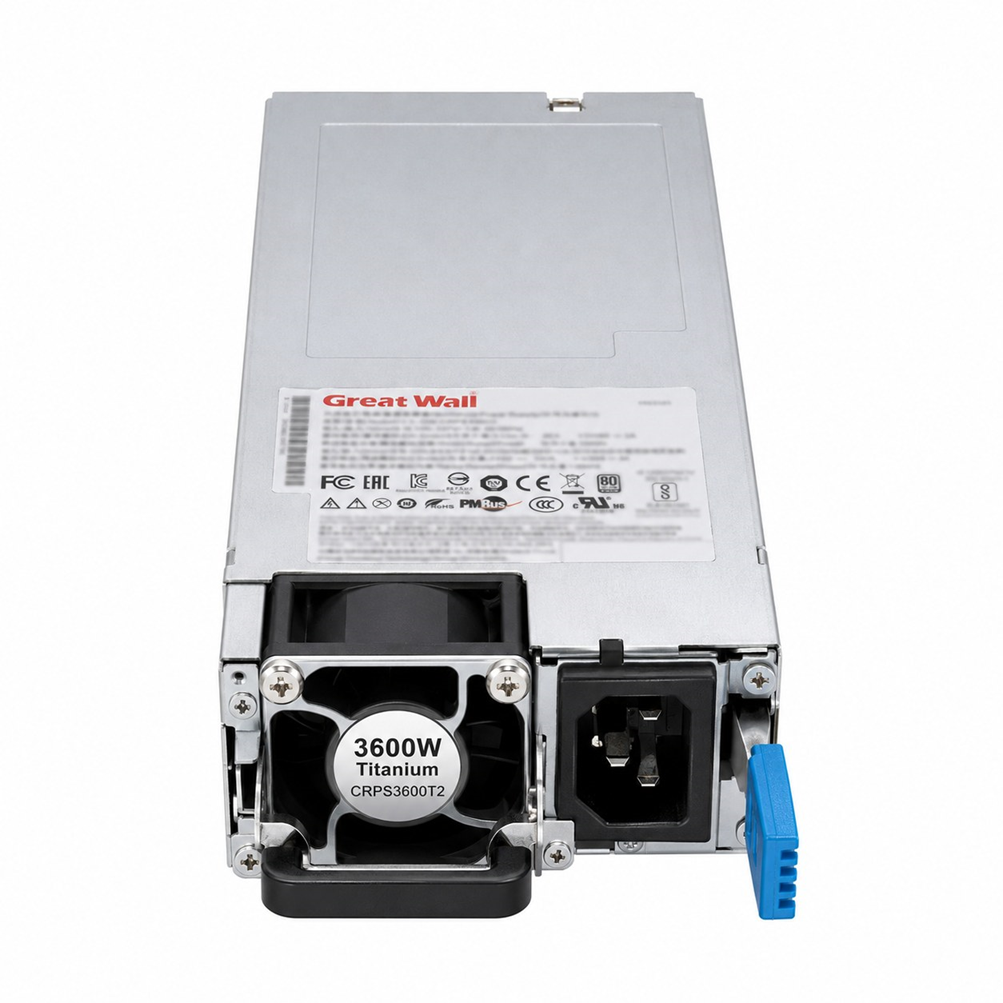
On 3 October 2026 Powernexu Technology Co Limited in Hong Kong highlighted the Great Wall CRPS3600T2 for system integrators, distributors and technical purchasing teams. The company supports model selection and sourcing for AI, GPU and high-performance computing projects. The module is listed at 3,600 W with a 12 V main output and a separate 12 V, 3 A standby rail. Physical size is 185 × 73.5 × 40 mm. Efficiency class is Titanium. Input range is given as 90-264 VAC or 180-320 VDC. Powernexu states that the relevant question is how much output remains available under the actual supply conditions of the installation. It recommends confirming input-dependent output limits and thermal requirements before any configuration is approved. Headline wattage must not be treated as available at every voltage and temperature. Airflow is normal front-to-rear, designated FR. Operating temperature range is 0 °C to 55 °C. Installation review must account for the air that actually reaches the module and for chassis restrictions around it. Electrical checks include the mating connector, the standby supply and host control signals. A mechanically similar module is not automatically interchangeable. Selection support begins with the complete system requirement. The power budget must cover processors, accelerators, memory, storage and cooling. Expected operating load and workload changes are then set against the platform’s distribution limits. Redundancy adds a separate test. In a 1+1 arrangement the permitted server load must stay within the capability of either module operating alone under the specified conditions. The power distribution board, connectors and downstream paths must also support that single-module load. Two installed modules therefore do not make their combined nameplate rating available as fully redundant capacity. Powernexu works with customers on electrical, mechanical and management-interface compatibility before procurement. Useful starting data include the target server or backplane, the existing PSU model where relevant, and clear photographs of labels and connectors. Buyers can also supply input voltage, required outputs, planned redundancy mode and cooling arrangement. Services cover quotation, procurement coordination and deployment support, including multi-batch requirements and replacement planning. Final suitability depends on the complete platform. A higher-rated PSU does not by itself raise the approved rating of a backplane, connector or server. System qualification remains necessary.
The practical filter is simple. Require the supplier to state the derated output at the actual input voltage and at the upper end of the temperature range. Require a single-module load calculation that stays inside those derated limits. If either number is missing, the configuration is incomplete. Run that check before the purchase order is signed.
Author bio: Alex Mercer, senior commentator for an international technology weekly covering data-centre power architectures and high-density server procurement.