SeaPRwire – Titan OS has raised $46 million in a mix of equity and debt, the Barcelona-based developer of a smart TV operating system said on Wednesday, bringing its total funding to $110 million.
The debt facilities were provided by funds and accounts managed by BlackRock. Highland Europe and Mangrove Capital Partners, both existing backers, took part as well. Titan raised $58 million in 2025.
Executives presented the round as optional. The company said it could have stayed private and grown slowly, and chose the faster route because it wants more manufacturer partnerships and more countries.
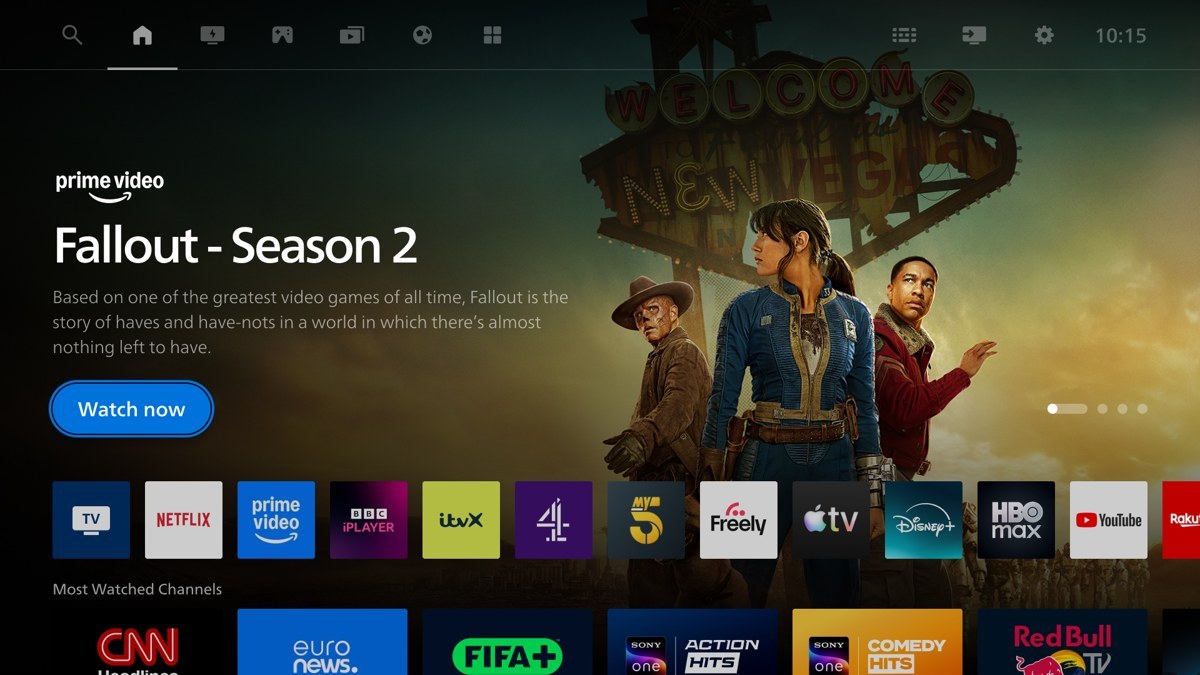
Titan sells a software layer that sits between a television and the apps a viewer opens. Set makers do not pay much for it up front. They receive a share of what it earns from advertising sold against the home screen and from free ad-supported streaming channels carried on the platform. That is the whole proposition: a television that keeps paying after it leaves the factory.
Free ad-supported channels carry licensed programming and the viewer pays nothing, with advertising covering the cost, which makes them the cheapest way for a platform to fill a screen. They also keep the ad money inside the operating system instead of handing it to an app. Titan’s partnerships with TiVo and Tubi fit that arrangement. TiVo brings a brand and a channel catalogue in some regions, Tubi brings a library in Britain, and Titan sells the advertising around what both supply.
The installed base is where the money starts. Titan says its software now reaches 30 million users, up from 18 million a year earlier, and that the figure includes work as a sales partner for TiVo in some regions and for Tubi in Britain.
Sharp, AOC, Vestel and Skyworth joined as partners over the past year. Philips is the case Titan points to. The Dutch manufacturer moved its 2026 models onto Titan’s software and dropped Google TV to do it, which is a bigger concession than a licensing deal usually involves: the set maker gave up a platform it had already shipped and took on the cost of switching interfaces, app certification and after-sales support across the whole 2026 range.
“Our bread and butter is the monetization of our inventory on our own network,” said Hyoung-Ung Kim, the company’s newly appointed chief financial officer. He described a loop in which a bigger audience pulls in sales partners and agencies, and the resulting ad demand makes the platform easier to sell to manufacturers.
Kim’s phrase for the other half of that business was “owned and operated or via our extensions”, which covers inventory Titan sells beyond the screens it directly controls. The 30 million figure counts both. A sales partnership puts Titan between a content owner and the ad market, and the fee it takes for that position does not require the viewer to be using Titan’s interface at all. It is a smaller business than owning the screen and a faster one to add, and the company counts both in the same reach number.
Content discovery is one destination for the new money. Finding something to watch still takes viewers a long time, and Titan is adjusting its interface and applying AI to shorten the search, while signing more free ad-supported channels to fill the rows on the home screen.
“What differentiates us here from the walled gardens is that we do not have our own content offering,” said Tobias Pfalzgraff, senior vice president of people and marketing. He named Google’s habit of steering viewers toward YouTube as the opposite arrangement. Titan’s claim is that it has nothing of its own to promote, so its recommendations can be treated as neutral.
Whether that neutrality is worth much to a viewer is a separate question from whether it is worth much to a manufacturer. Titan also uses AI for ad recommendation and audience segmentation, which sets what it can charge for the slots it sells. Better targeting raises the price of the same inventory, and the company says the wider reach has given it more to offer marketers on engagement as well as on audience size.
The company employs about 250 people and has offices in Barcelona, Amsterdam and Taipei. It opened a London office in the past year to concentrate on advertising sales, which is where the revenue is. Software engineering stays where it was; the growth is on the selling side.
Europe is the base. Executives argue that only a handful of manufacturers build their own operating systems, and that more will license one as hardware margins compress. That is a forecast about an industry, not a disclosed order book, and Titan did not say which manufacturers it is talking to or how long the sales cycle runs.
The economics of the set business are the lever behind that argument. Kim said televisions are not a profitable product on their own, which is why manufacturers depend on partners that share revenue after the sale. Rising chip prices, pushed up by AI demand elsewhere in the market, have made that dependence more urgent rather than less.
Titan does not disclose revenue, advertising revenue per user, or whether the business is profitable. It did not break down how much of the $46 million is equity and how much is debt, or give the terms of the BlackRock facilities. It also did not say what share of the money goes to the content discovery work it described. A round weighted toward debt is cheaper than equity for a company that can service it, and harsher for one whose growth stalls. Which applies here is not public.
What is public is the growth rate: 18 million to 30 million users in twelve months, roughly two thirds. The pitch to manufacturers rests on that curve continuing, since the ad revenue they share depends on scale rather than on the quality of the software.
That leaves the model exposed to a familiar problem. An operating system is only as good as the number of sets running it, and the manufacturers who might adopt it are the same ones being courted by platforms that own content and can subsidize the software. Titan’s answer is that it takes no side in what people watch. Its customers will decide whether that is worth a share of the till.