By: Alistair Kroon – SeaPRwire – Iran will not kneel. That was the clear message from the podium. President Masoud Pezeshkian used the UN General Assembly to frame his country as the target, not the starter, of conflict. Diplomacy is preferred. Surrender is off the table.
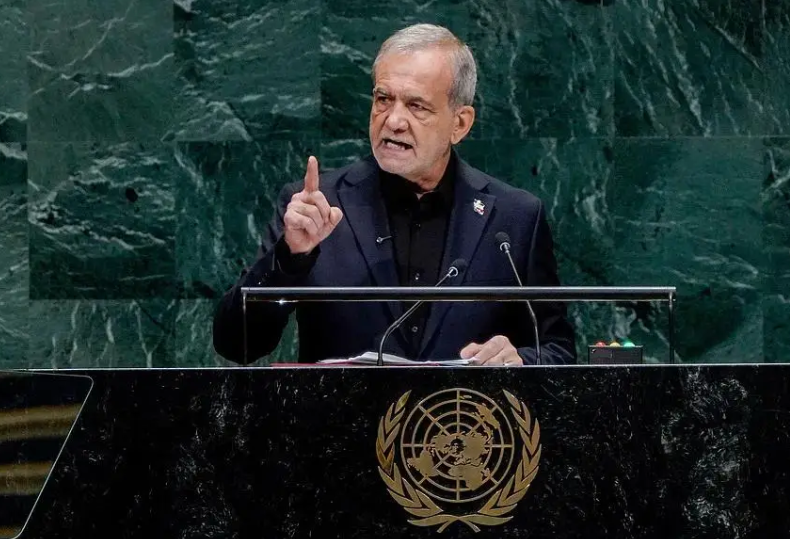
Pezeshkian spoke on Wednesday, 23 September 2026, at the United Nations General Assembly. He said Iran has never launched a war and is itself a victim of terrorism. He described an Iran whose supreme leader was assassinated without legal basis or justification. He described schools that had been bombed. He stated that Iran would not yield in a war with the United States yet favored ending the conflict through diplomacy. He told the hall that President Trump must understand resistance only grows under sanctions, increased pressure and bullying. Iran would neither bow nor kneel. He repeated that Iran is not an aggressor, has never started a war and has always sought negotiation. War was imposed. Iran proved it does not fear combat. He warned against a world in which military force replaces legitimacy, terrorism replaces politics and negotiation, and war replaces dialogue and diplomacy. On the Strait of Hormuz he was direct. Tehran will not allow the waterway to be used for aggression against Iran. It cannot tolerate forces that sail freely for their own benefit while using the same route to attack Iran. This was Pezeshkian’s first appearance at the United Nations since the United States carried out attacks on Iran. The American delegation left the hall as he began speaking. On nuclear technology he insisted the goal is progress, not weapons that threaten society. Iran wants cooperation on security. Energy is needed for development. The country rejects any monopoly on nuclear technology by a few. It will not accept limits on the peaceful use of nuclear technology. It will not develop nuclear weapons. Peace does not come from the battlefield, yet the security of the Iranian people and state must be guaranteed. Defense systems exist so that no one believes Iranian cities can be bombed without cost.
Official language stresses victimhood, negotiation and defensive necessity. The practical signals are firmer. Sanctions and pressure are treated as fuel for resistance rather than reasons to concede. The Strait of Hormuz is framed as a red line against any attempt to use it as a lever. Nuclear rights are non-negotiable on the peaceful side and explicitly ruled out on the weapons side. The walkout by the U.S. delegation underscored the distance. The speech keeps the door to talks open while closing the door to submission. History of imposed conflict is used to justify readiness to fight. The defense posture is presented as deterrence, not expansion.
The pendulum remains tense. Tehran rejects surrender and claims the victim role. Washington continues pressure. The next test is whether diplomacy can restart or whether the Strait and the nuclear file harden further. Either path will set the cost for both sides.
Author bio: Alistair Kroon, overseas geopolitical commentator whose columns on Middle East power balances, nuclear disputes and post-conflict rhetoric appear regularly in major international newspapers.