By: Marcus Sterling – SeaPRwire – Security lines drawn on maps rarely stay fixed once forces are on the ground. In Gaza the yellow line was meant to mark a clear divide. Now the control area has already grown past the original share. That gap between the agreed line and the current map is the core tension. Netanyahu stood inside the Strip and made the position plain.
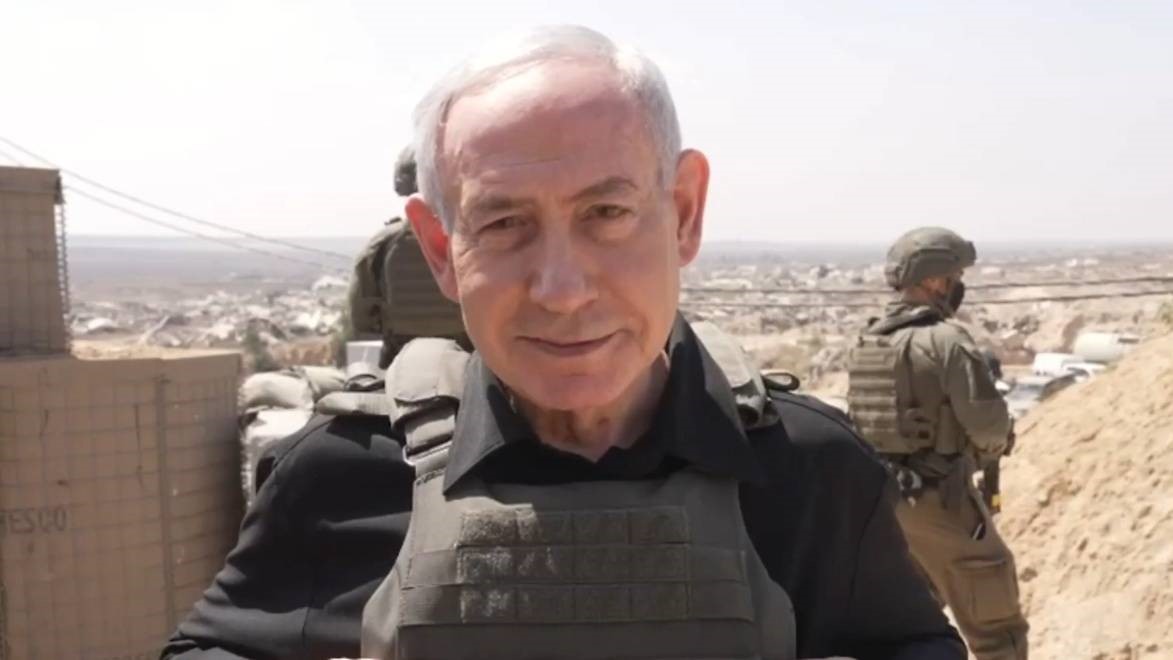
Israeli sources reported on the second that the prime minister traveled to the Gaza Strip that day. He stated on site that the IDF will hold the defense line known as the yellow line until Hamas is disarmed. He said the forces control this land and will continue to hold this line. They are doing their utmost to achieve the goal of disarming Hamas and demilitarizing the Gaza Strip. Gaza will no longer pose a threat to Israel. He added that as the IDF continues to eliminate the militants who threaten them, more progress will follow. The yellow line itself comes from the first phase of the Gaza ceasefire agreement. East of the line is the IDF control zone, roughly 53 percent of the Gaza Strip. West of the line remains under Hamas control. The IDF no longer stations troops or conducts operations there according to the original terms. Since the ceasefire took effect the IDF has steadily expanded the area under its control. At present it holds more than 60 percent of the land in the Strip. Jared Kushner, son-in-law of U.S. President Trump, and members of the Gaza Peace Committee had earlier met with Netanyahu. The talks aimed to push forward the so-called Gaza peace plan. Israel and the United States continue to seek a broader plan that covers reconstruction of Gaza and the disarmament of Hamas. At the same time the U.S. side still allows Israel to continue targeted strikes in the Strip on a temporary basis.
The stated goal stays fixed on full disarmament and demilitarization. The line on the ground has already shifted beyond the original 53 percent. That expansion sits alongside the political track that includes the Kushner meeting and the wider reconstruction discussion. Targeted strikes remain permitted even while the broader plan is pursued. The practical cost is measured in the difference between the agreed percentage and the current map. Any next step must start from the numbers already on the record. Hold the expanded zone or return to the original line. The choice will decide whether the yellow line remains a temporary marker or becomes the new baseline.
Author bio: Marcus Sterling, senior researcher at an independent European strategic think tank focused on conflict-zone security arrangements.