By: TechVanguard – SeaPRwire – Europe just held another big space defense talk in Paris. More than thirty countries showed up. French Defense Minister Catherine Vautrin opened it. Officials from the EU, Ukraine, the UK, Norway and Switzerland all said they want to move together. That is the public line. The private reality is colder. Europe still cannot run a serious space operation without American hardware. Starlink proved it again this year.
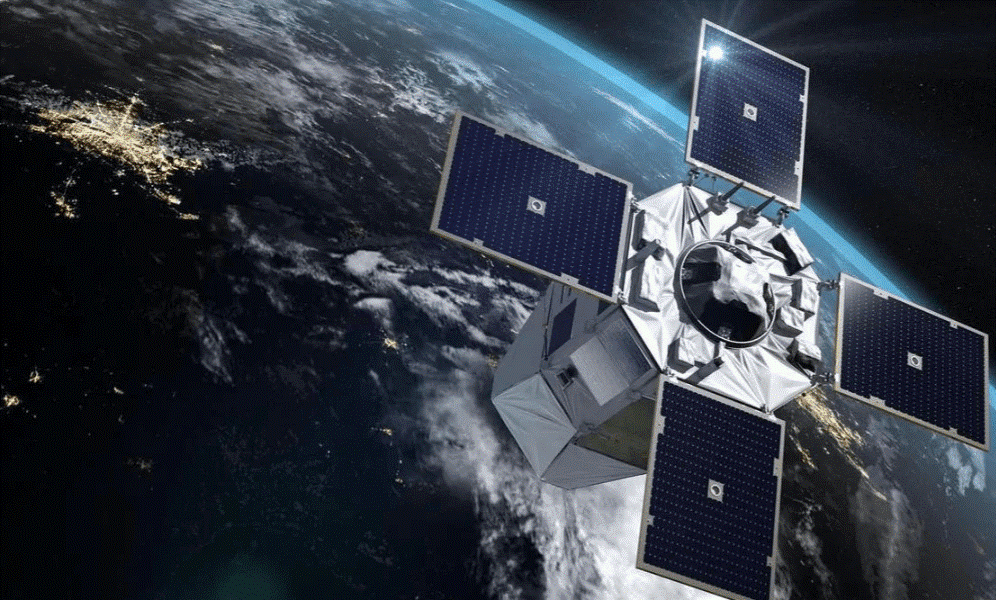
Look at the official numbers first. In November 2025 the European Space Agency members met in Bremen and raised the total budget to 22.1 billion euros. That is a 32 percent jump, the biggest ever. They gave the agency a clear defense and security mandate for the first time. Director General Josef Aschbacher said the agency now has explicit authorization from member states. The old “peaceful purposes only” rule from the 1970s is effectively gone. France has already launched several CSO reconnaissance satellites. Germany is building its own military satellites. In June 2025 the European Defence Agency signed the LEO2VLEO contract with Dutch firm ISISPACE. The Netherlands and Austria are paying. The plan is a military defense constellation that can move between low Earth orbit and very low Earth orbit, with launch inside two years. France and Germany started the JEWEL project in October 2025 for independent early-warning against hypersonic missiles. The EU’s IRIS² system is supposed to put 348 satellites into orbit—330 in low Earth orbit and 18 in medium Earth orbit—and go live between 2029 and 2030. The European Space Resilience Plan asked for 1.35 billion euros and walked away from Bremen with about 1.2 billion. Germany’s defense minister hosted the first DACH+L meeting in Berlin in May 2026 and promised 35 billion euros by 2030 for military space, including encrypted low-Earth-orbit constellations, launch capacity and an expanded space command. Eight allies launched the HALO initiative at the NATO industry forum in Ankara in July 2026 to link national military satellites into one networked mega-constellation. On paper the project list looks busy.
Now the industry subtext. Total planned spending by European countries, the ESA, the EU and the big member states on space defense and dual-use systems through 2030 is at least 109 billion dollars. That money is still scattered. EU Commissioner Kubilius has already warned that national programs without a collective vision produce expensive redundancy. The ESA and the European Commission still argue over who owns what. Legal texts have not fully caught up with the new military mandate. European industry cannot match the speed of U.S. commercial firms that work under flexible government contracts. Early in 2026 Musk restricted Russian access to Starlink. Ukrainian forces immediately reported a roughly 50 percent drop in enemy offensive capability. That single switch showed Europe what dependence looks like in real time. At the Paris summit itself, SpaceX and Blue Origin canceled their attendance after U.S. government pressure. Europe is writing big checks and launching more meetings. It still lacks the industrial base and the independent sensor layer that would let it see and act without asking Washington first.
The supply-chain picture is simple. Europe can fund constellations and rename old agencies. It cannot yet build or operate the full stack without American components and American goodwill. Until that changes, every new “European Space Shield” or HALO network remains one policy decision away from limited utility. The next budget cycle will show whether the money actually buys independent capacity or just more dependent hardware with European logos on it.
Author bio:TechVanguard, former technical director at a major Silicon Valley aerospace firm who now writes detailed breakdowns of space systems and supply-chain risks for industry readers.