By: Alex Mercer – SeaPRwire – Every so often a product wins an award and the room shrugs. Then there’s the Epomaker Glyph. Tom’s Guide handed it Best Keyboard at their 2026 Awards on September 17, at Ideal Glass Studios in New York. This is not a spec-sheet victory. It’s a design-philosophy victory. And that distinction tells you where the peripheral market is actually heading.
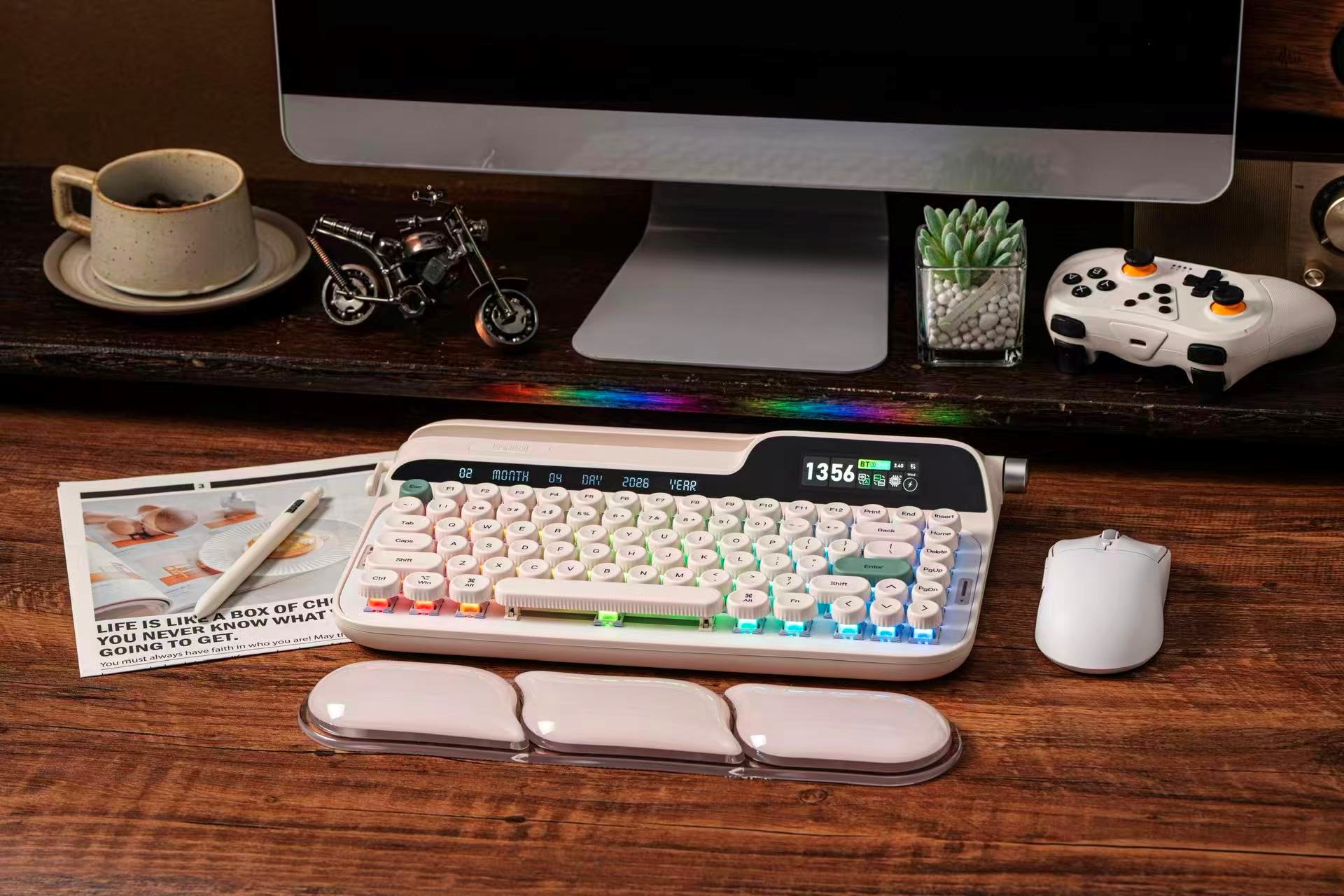
Let’s lay out what happened, stripped of press-release varnish. Tom’s Guide evaluated nearly 100 keyboards. Their reviewer called the Glyph unusually engaging. The publication praised it for blending distinctive design with an enjoyable typing experience. It reportedly earned a permanent spot on the reviewer’s desk. That last detail is the one worth circling. Review units cycle out. Desk residency is the real verdict.
Now here’s the official framing versus what’s really going on. Epomaker says the Glyph started from a simple question. Could a modern mechanical keyboard bring back the character and physical expression of a typewriter? Rounded keycaps. Curved body. A return lever. An integrated display system. A side lever handling Enter and Backspace. A rotary knob for media and navigation. Dual screens. A recessed device slot reinterpreting the classic paper slot. Seventy-five percent layout. Adjustable typing support. Wrist rest.
That’s the fact sheet. Here’s the subtext. Epomaker is not selling nostalgia. They’re selling friction. Deliberate, tactile friction. In a market drowning in ultra-thin, haptic-flat, feature-identical slabs, friction is differentiation. The typewriter references aren’t decoration. They’re structural. The lever is a real input. The knob is a real control. The screens are real information surfaces. This is industrial design doing the job marketing usually fakes.
The brand name itself carries the thesis. EPOMAKER comes from EPO(ch) plus MAKER. Every Era Has Its Makers. The company frames a Maker as someone who builds what comes next rather than rejecting defaults for sport. That’s a mature position. Rejection is easy. Construction is hard. The Glyph takes a familiar object from the past and rebuilds it for how people work now. That’s not retro. That’s translation.
Zoom out and the momentum looks deliberate. At IFA 2026, the RT98 took a Best of ShowStoppers Gadgety Award for its desktop-focused design and expanded functionality. The RT75 won Gizmodo’s Best of IFA 2026 Awards for Best PC Accessory. Three products, three distinct design bets, three separate juries. That’s not luck. That’s a portfolio strategy with a consistent point of view.
Here’s the supply-chain read, plain and simple. Epomaker is signaling that niche mechanical keyboard buyers will pay for personality. The big peripheral houses optimize for volume and sameness. Epomaker optimizes for identity and shelf presence. As long as the typing feel holds up under daily abuse, that positioning is defensible. The moment the novelty outruns the build quality, it collapses. Tom’s Guide’s desk-residency comment suggests, for now, the build holds.
So if you’re watching this space, watch the follow-through. Awards are easy to collect and hard to compound. The real test is whether Epomaker ships a second-generation Glyph that fixes what early adopters complain about instead of chasing another headline. One practical takeaway for buyers. Don’t chase the trophy. Type on it for a week. Your wrists will file the honest review.
Author bio: Alex Mercer, a Silicon Valley technical director and geek analyst who has spent two decades tearing down consumer hardware and explaining what the spec sheets won’t.