By: Alistair Kroon – SeaPRwire – A border lake just became a political prop. On 27 August President Trump signed an executive order renaming Lake Ontario the “American Lake.” The order takes effect at once. He told the Interior Department to update the Geographic Names Information System. Behind him stood a large sign showing the Great Lakes map. “American Lake” appeared in red letters over Ontario. Another map read “Make the Great Lakes Great Again.” The gesture is theatrical. The underlying message is not.
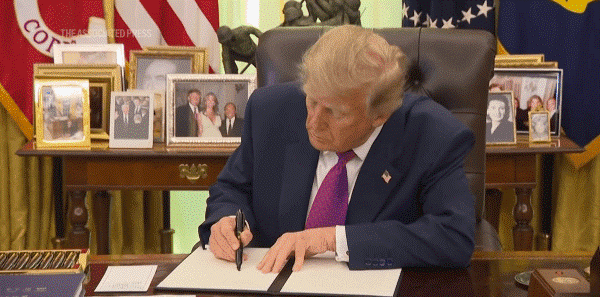
Trump framed the move as payback. He said Canada has long taken advantage of the United States on trade and military matters. “We can’t go on like this,” he stated. He added that Americans love the Canadian people. Their representatives, he claimed, have not acted properly. Maybe they will change. He said he does not really know and it does not matter much. He reminded the room that he had already renamed the Gulf of Mexico the “American Gulf.” Now the United States has a bay and a lake. Next it might need an ocean. He floated changing the name of the Atlantic or the Pacific. Two days earlier, on 25 August, he had posted that the administration was seriously considering the lake rename. The reason given then was an expected sharp drop in economic exchange with Ontario province. The executive order converts that online remark into official action.
Canadian Prime Minister Carney rejected the change the same day. On social media he noted that the name Lake Ontario is more than four hundred years old. It predates both Canadian Confederation and the American Declaration of Independence. The word comes from an Indigenous language. It means, aptly, a beautiful and wide body of water. Carney closed with a plain assertion. Canadians understand reality. The name is Lake Ontario. It was. It is. It always will be. The lake itself sits on the border. Its northern shore is Ontario province. Its southern shore is New York state. Geography does not shift with an executive order. Naming rights claimed by one side do not erase the other side’s history or presence.
The practical effect is limited to American maps and databases. The political signal is larger. Trade friction between the two countries has already risen. The rename turns a shared natural feature into a public scorecard of that friction. For any capital watching the next move, the test is simple. Watch whether the Geographic Names Information System actually changes. Watch whether Canadian maps and bilateral documents ignore the new label. If both happen, the episode remains a domestic American gesture. If either side escalates the naming fight into trade or security measures, the lake becomes another front in a wider dispute.
Author bio: Alistair Kroon, geopolitical commentator whose columns on North American power contests appear regularly in major international newspapers.