By: Gavin Thorne – SeaPRwire – Voting for Russia’s ninth State Duma began at 8 a.m. local time on 18 September in Kamchatka Krai and the Chukotka Autonomous Okrug. This is the first nationwide parliamentary election since the 2022 special military operation in Ukraine. The calendar is short and deliberate. Ballots run through 20 September, the single nationwide voting day. Results are due no later than 5 October. The process is already under way across eleven time zones.
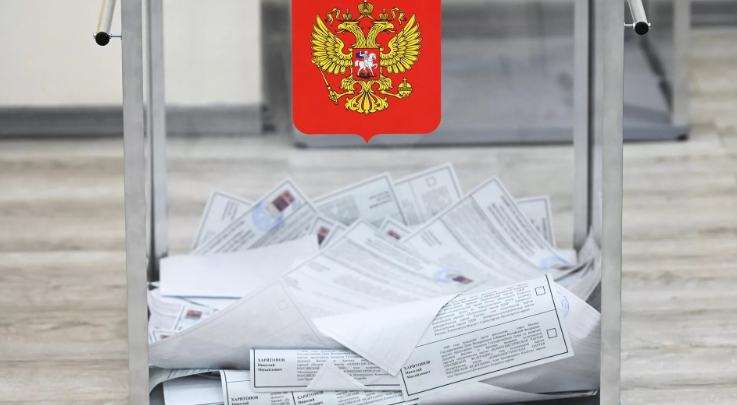
Official details from the Central Election Commission set the mechanical frame. More than three thousand candidates completed registration. Ten parties secured places on the federal lists. Five of them already sit in the current Duma: United Russia, the Communist Party of the Russian Federation, A Just Russia, the Liberal Democratic Party of Russia and New People. Five more non-parliamentary parties, including Rodina and the Green Party, also qualified. The 450 seats split evenly. Two hundred twenty-five are allocated by proportional representation; a party needs five percent of the vote to clear the threshold. The other two hundred twenty-five come from single-member districts decided by simple plurality. Remote electronic voting is open. Three hundred nineteen polling stations operate outside the country for more than 1.816 million registered overseas voters. These are the numbers as published. The timing itself carries the heavier signal. Holding the first full national vote after 2022 under a staggered, multi-day schedule with electronic options shows the authorities chose continuity over delay.
The same release places the election inside the existing institutional map. The dual system of party lists and single-member districts remains unchanged. The five-percent barrier stays in place. Overseas voting expands the geographic reach without altering the core rules. Staggered hours across eleven time zones simply match the country’s size. No new thresholds or seat totals appear. The practical effect is a familiar contest run under wartime conditions. Parties already inside the Duma start with organizational advantage. Newer lists must clear the same numerical bar. The overseas electorate adds volume but does not rewrite the formula. Every element listed is public and fixed.
The calendar is now live. Ballots opened in the Far East and will close across the remaining zones by 20 September. The Central Election Commission has set the outer limit for results at 5 October. Until those numbers appear, the only confirmed facts are the start time, the seat formula, the party lists and the first post-2022 nationwide parliamentary vote. The next data point is the count itself.
Author bio: Gavin Thorne, a veteran geopolitical commentator whose columns appear regularly in major international newspapers and who focuses on post-2022 institutional continuity in major powers.