No single payment method in Malaysia accounts for more than 35 percent of e-commerce transaction value in 2026, according to an IDC InfoBrief commissioned by 2C2P and Antom. That fragmentation is the defining fact of the market: a card-only checkout is structurally incomplete, and a checkout that bolts on every method a provider can list often performs worse than one built around three. The question merchants keep getting wrong is not which payment gateway to pick, but which rails to switch on, and in what order.
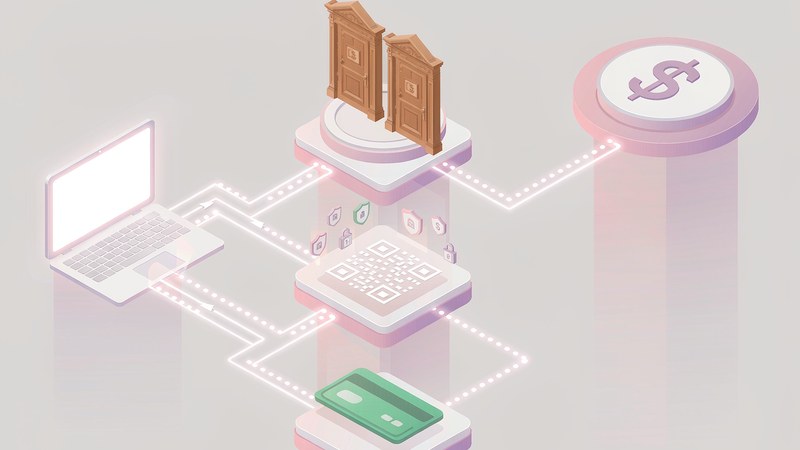
The infrastructure layer explains why. Two national rails operated by PayNet carry most domestic online payment volume: FPX, the online banking transfer Malaysians have used for over a decade, and DuitNow, the family of instant payments built on the Real-time Retail Payments Platform, with DuitNow QR as the national interoperable QR standard. Cards remain meaningful, particularly at higher ticket sizes. Wallets, led by Touch ‘n Go eWallet, ShopeePay and GrabPay, keep taking share. Bank Negara Malaysia’s Annual Report 2025 puts numbers behind the shift: 18.4 billion e-payment transactions in 2025, up 25 percent from 14.7 billion, or 538 per person per year, with retail e-payment value reaching RM831 billion.
The central bank’s data also shows how the mix is rebalancing underneath the headline. DuitNow QR volume doubled to three billion transactions in 2025, from 1.5 billion a year earlier, with registered merchant touchpoints reaching almost three million by end-2025, up from 2.6 million, and the regulator notes that most new touchpoints are small businesses that previously ran on cash. Mobile banking is now the preferred online banking channel with a 64 percent share, and active mobile banking users grew 8.7 percent to 25 million while internet banking users fell 3.1 percent. On the card side, debit transaction growth of 20.5 percent ran at nearly double the credit card pace, with the average debit ticket falling 11.5 percent to RM69, a pattern consistent with debit absorbing everyday low-value purchases from other channels. Cheque use, the classic marker of a cash-and-paper economy, fell 21.3 percent to 31.4 million cheques for the year.
What actually moves checkout completion
One provider-published sample, drawn from Malaysian SME stores managed by the web agency ZenWeb between 2024 and 2026, gives the most concrete picture of how rail count translates into completed orders. Moving from card-only checkout to card plus FPX lifted median completion from roughly 41 percent to 58 percent. Adding DuitNow QR as a third rail lifted it to 67 percent. A fourth and fifth rail added less than three points between them.
The flattening is the commercial point. Every additional rail adds a logo, a fee schedule and a reconciliation line, in exchange for a gain that shrinks toward zero. Three well-configured rails beat six half-configured ones, and the third rail only earns its place because mobile-first buyers, the majority in Malaysia, complete QR flows with less friction than redirect-based bank payments.
Where each rail fails, and why
The same sample splits failed attempts by cause, and the causes differ by rail in ways that change what fixes work. FPX failures concentrate in the redirect journey: 46 percent of failed attempts are customers who abandon at the bank login step, with another 27 percent timing out without a callback. Card failures with 3DS concentrate at the issuer, with 54 percent declined by the bank. DuitNow QR failures split between abandonment at the scan step, 41 percent, and balance or limit rejections, 29 percent.
The fix follows the cause. Redirect rails need recovery: a resumable order and a reminder bring back roughly a third of failed attempts on this sample, and adding a timed retry link through email or WhatsApp lifts recovery past half. Card rails need better decline handling: a clear decline message and an alternative method offered on the spot. Treating every failure the same way, with one generic retry email, is why checkout abandonment stays high long after the technical integration is done.
The 2026 switch merchants need to plan for
FPX itself is changing. PayNet announced in 2025 that it is transitioning from FPX to DOBW, the DuitNow Online Banking and Wallets platform, which does the same job as FPX but also lets customers pay from an e-wallet balance rather than only a bank account. Banks are migrating one by one rather than in a single cutover, and the customer-visible difference is minor: the bank login screen looks slightly different.
For merchants the practical requirement is narrow but real: the payment gateway must support both FPX and DOBW during the transition, so checkout keeps working regardless of which rail a customer’s bank has moved to. Established providers generally handle this behind the scenes, but it belongs in the written due diligence list before signing rather than in a support ticket after a failed settlement week.
The cross-border plumbing is moving too
DuitNow QR already interoperates with neighbouring national QR schemes, and bank account transfers run through a separate linkage with Singapore’s PayNow. Cross-border QR transactions grew 2.5 times to 29.7 million in 2025. In February 2026, PayNet and NPCI International agreed a phased linkage with India’s UPI, beginning with Indian travellers paying at Malaysian merchants. Malaysia is also a founding member of Nexus Global Payments, set up by six central banks in 2025 to connect instant payment systems, with a domestic-to-Singapore pilot targeted toward the end of 2027.
None of that reaches a checkout by itself. Cross-border reach only becomes revenue when the merchant’s provider enables the linked scheme, which makes the provider’s regional depth a selection criterion, not a footnote. The same IDC InfoBrief documents how differently neighbouring markets pay, with wallets and bank QR rails leading elsewhere in the region, so a gateway chosen for one market may need a second integration for the next.
Settlement mechanics decide the cash position
Completion rate is only half of the payment picture; the other half is when the money actually lands. The bank deposit a merchant receives is never the sum of its orders: it is orders minus fees, refunds and held amounts, batched on the provider’s settlement cycle. The same operational sample that produced the failure data makes two points worth carrying into contract negotiations. First, refunds on redirect rails are not instant reversals; an FPX refund is usually processed as a separate outgoing payment, so the customer waits days and will ask why, which makes the refund copy on the order confirmation part of the payment design. Second, refunds issued inside a provider dashboard do not update the store by themselves; a webhook has to write them back, or the shop’s stock and finance records drift from reality with every refund.
That reconciliation requirement is the quiet argument for choosing fewer rails from one provider rather than many rails from several. Each additional provider adds a settlement cycle, a fee schedule and a payout identifier format to match against orders at month end. Merchants who store the provider’s payout and transaction identifiers on every order can close their books in minutes; merchants who treat the bank deposit as revenue spend the first week of every month discovering why it is not.
What to ask before signing
The market’s regulator has also signalled where data is heading: Bank Negara Malaysia’s open finance exposure draft, issued in November 2025, proposes standardised data-sharing APIs at the largest banks from January 2027, with PayNet already piloting the framework with seven banks and the Employees Provident Fund through the second half of 2026. Merchants do not need to act on it yet, but it points toward payment records that move with the business rather than staying locked inside whoever was signed first.
Against that backdrop, the working due diligence list is short. Ask each shortlisted provider for coverage against your own transaction and decline data, segmented by order value and customer type, rather than a headline method count. Ask for success rates on the specific methods your revenue depends on, and for the full local method list for every market on the expansion plan. Confirm FPX and DOBW support in writing during the transition. Confirm settlement timelines and currencies, and who maintains the integration after launch. A store that fixes those four answers rarely needs a tenth rail, or a tenth provider, to lift its checkout rate.
Sources
- 2C2P 🔗, “How to Choose a Payment Gateway in Malaysia” (5 November 2026): 2026 IDC InfoBrief figures on method fragmentation, the FPX to DOBW transition announced by PayNet, cross-border QR growth of 2.5 times to 29.7 million transactions in 2025, the UPI linkage agreed in February 2026, and the open finance exposure draft timeline.
- Bank Negara Malaysia 🔗, “Annual Report 2025: Promoting Safe and Efficient Payment and Remittance Services”: 18.4 billion e-payment transactions, 538 per capita, retail e-payment value of RM831 billion, DuitNow QR volume doubled to 3 billion with nearly 3 million touchpoints, mobile banking at a 64 percent channel share, and cheque volume down 21.3 percent.
- Bernama 🔗, “BNM: Malaysia’s E-Payment Transactions Jump 25 Pct To 18.4 Bln In 2025” (31 March 2026): central bank annual report coverage confirming the per-capita and DuitNow QR figures and the Financial Sector Blueprint target.
- ZenWeb 🔗, “Payment Gateway Malaysia: Which One Fits Your Store?”: provider client sample of Malaysian SME stores, 2024 to 2026, on checkout completion by rail count and failure causes by method.
- Help2Pay 🔗, “FPX vs DuitNow: Which Performs Better in 2026?”: operational comparison of the two national rails, failure modes, and routing practice between redirect and QR flows.
This article was prepared by the expert team at Global Infinity Labs, drawing on insights and data provided through its MCP data services.
About Global Infinity Labs
Global Infinity Labs is an AI innovation company specializing in MCP data services.
Email: support@globalinfinitylabs.com
To share industry insights, report corrections, or submit story tips: editors@globalinfinitylabs.com or https://www.globalinfinitylabs.com/submit.