By: Alex Mercer – SeaPRwire – Let’s cut the crap. A pyrocumulus cloud formed over Bordeaux last weekend. That’s not a weather event. That’s a distress signal. In North America, we’ve watched these fire-breathing thunderstorms roll across the prairies and forests for years. We know what they mean. But in France? Never. Until now.
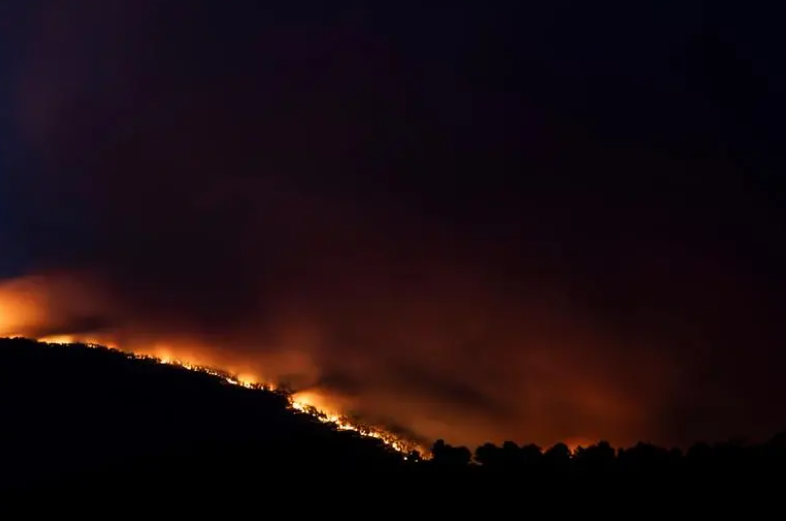
The scorched earth in Gironde has already surpassed 116,000 hectares. Let that number settle. That is the largest fire footprint France has ever recorded. And the season is not even close to done. When Victor Resco de Dios from the University of Lleida says some of these burns detonate with the energy of multiple atomic bombs, he isn’t posturing. He is describing the new physics of a continent that no longer has a “fire season.” It has a fire eternity.
Here’s what the official reports will say, and here’s what they actually mean.
The official line: A perfect storm of wet winter growth and record summer heat created the fuel load.
The industry subtext: This is the “whip effect” in full swing. Matthew Jones from East Anglia nailed it. The wet winter supercharged vegetation. The heatwaves that followed turned that lush growth into a tinderbox. The transition was so violent and so abrupt that fire behavior models—the same ones used across the EU—couldn’t keep up. We aren’t dealing with a slow burn. We are dealing with a chemical reaction moving at highway speeds.
The official line: Firefighters are doing everything they can, deploying specialized vehicles and ground crews.
The industry subtext: It doesn’t matter. Stefan Doerr from Swansea University put it bluntly: in Australia or the US, you expect some fires to just run until they run out of fuel. In Europe, that logic was foreign. It isn’t anymore. When you have simultaneous crises in France and Spain and the evacuation count passes 300,000, you are no longer managing a fire. You are managing a collapse of local infrastructure. The fire isn’t just burning trees. It is burning roads, evacuation routes, and local economies.
Let’s talk about the pyrocumulus again. This isn’t just a cool satellite image. It is a feedback loop from hell. The fire generates so much heat that it creates its own weather system, pulling in more wind, generating lightning that starts new fires, and making its own rain that does nothing to stop the ground burn. It becomes self-sustaining. Guillermo Rein from Imperial College pointed out that the rate of spread is the real killer here. Fire crews can’t outrun it, and they certainly can’t stop it. In North America, we’ve seen this play out. In Europe, they are just seeing the first act.
And the trajectory is straightforward. If you look at the IPCC models and overlay them with the current fuel maps, the trend is not a gradual increase. It is a step function. France and Spain are heading into their fourth heatwave of the summer. Four. That isn’t an anomaly anymore. That is the new baseline. The government says it will take months to fully extinguish these fires. Realistically, they will keep burning until the rain comes, and given the current forecasts, that rain might not arrive in a meaningful way for weeks.
Here is the real kicker for the regional economy. This isn’t just about forests. This is about the wine industry in Bordeaux. It’s about the defense hubs near the affected zones. It’s about tourism. When you have a fire of this magnitude pushing into urban interfaces, you start talking about supply chain disruptions that go far beyond timber. The smoke alone kills. Estimates put global deaths from wildfire pollution at over 100,000 annually. That’s not a future problem. That’s a current tax.
What does this mean for the rest of the world watching? It means that the “new normal” we have been talking about in California and Australia has officially migrated across the Atlantic. Resco de Dios warns that we might be looking at fires that hit a million hectares in a single event. That is not hyperbole. That is a forecast based on current carbon trajectories.
So, here is the blunt takeaway. We have to stop treating this like a weather event. This is an industrial accident caused by decades of fossil fuel combustion. The moment we stop trying to “fight” these fires and start accepting that they are going to burn, we can start redesigning the infrastructure around them. Until then, every summer is going to look like this. And it’s going to get worse.
Author bio: Alex Mercer, a Silicon Valley tech director and systems analyst specializing in climate risk modeling and infrastructure resilience.