By: Marcus Sterling – SeaPRwire – South Korea’s presidents keep falling to investigation, prison or worse. Prosecutors have been at the center of that cycle for decades. On August 4 the government approved an amendment that strips them of direct and supplementary investigation powers. The change takes effect October 2. The 1948 Prosecutors’ Office disappears. Indictment moves to a new Prosecution Office. Investigation splits to a Serious Crime Investigation Office and the police. President Lee Jae-myung called the separation the starting point for normalizing an abnormal system. That is the official break. Whether it ends the Blue House curse is still open.
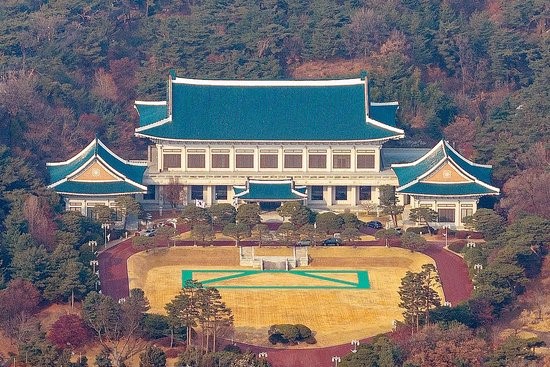
Official reform and the historical pattern sit side by side. Lee said prosecutors held excessive power for decades. The ruling Democratic Party framed the bill as ending a “politicized prosecutor hotbed.” After independence, public memory of colonial police abuse created demand for prosecutors to check the police. The 1949 Prosecutors’ Office Act and 1954 Criminal Procedure Act locked in a concentrated model: direct investigation, command over police, indictment, arrest warrants, and legal weight for interrogation records. Under Syngman Rhee, Park Chung-hee and Chun Doo-hwan the prosecutors stayed subordinate to police, military or intelligence. They functioned as a regime appendage. The real rise came under Roh Tae-woo, elected December 1987 and out by February 1993. Military influence faded. Prosecutors from the Daegu-Gyeongbuk region filled the vacuum. Core posts went to prosecutor alumni. Large “anti-gang” drives followed. The label “Prosecutor Republic” stuck. In the 1990s neutrality disputes centered on the Central Investigation Department of the Supreme Prosecutors’ Office. It handled major political-business corruption cases, including the 1997 probe of Kim Young-sam’s son and the 2004 election-fund case. The same unit also became a tool when interests intertwined with power. A recurring pattern set in. New governments saw prosecutors clear the previous team in exchange for trust and delayed reform. Late in a term the same prosecutors turned on the sitting president’s circle and expanded influence through partisan conflict.
Earlier attempts to limit the system left gaps that the current law tries to close. Roh Moo-hyun was the first president to push reform—separating powers, targeting the Central Investigation Department, appointing a non-prosecutor justice minister, holding public talks. Prosecutors investigated his aides and, after he left office, launched a large probe. His death intensified debate over selective investigation and media pressure. Lee Myung-bak adjusted investigation shares with police, yet twenty-two prosecutors moved into the Blue House. Park Geun-hye faced criticism for soft treatment of the powerful and hard treatment of critics; after the crony-interference scandal the same prosecutors quickly investigated the Blue House. Moon Jae-in twice cut the list of cases prosecutors could investigate directly, abolished their command over police, and gave police first-investigation termination rights. Early in his term special units were kept to clear the previous administration, leaving a residual start-up power. Under Moon, Prosecutor General Yoon Suk-yeol opposed the reforms, opened a probe of Moon aide Cho Kuk, and the conflict escalated. Yoon resigned, entered politics and won the presidency. Prosecutors moved from tools of the regime to the regime itself. Influence peaked. Lee Jae-myung’s full abolition and functional split became possible because public demand to curb prosecutors had risen, because targeted probes of then-opposition leader Lee contrasted with the non-prosecution of Kim Keon-hee in a stock case, because the Democratic Party held a legislative supermajority, and because the prosecutor-general post sat in acting hands while resignations weakened institutional push-back.
Views on the curse itself diverge. One academic link ties it directly to prosecutors’ ability to dispose of presidents at will; removing that power may break the cycle. Other analyses point to deeper structures. The single five-year term, fixed in 1987 to block strongman return, produces short-term politics, thin consensus and early attacks. Wide presidential authority raises the chance that networks and relatives pull the office into corruption cases. The president’s power to appoint the prosecutor general creates a predictable prosecution cycle across administrations. Long-standing ties between the presidency and chaebol, rooted in the developmental-state model, repeatedly generate policy-for-funds exchanges that later become investigation targets. Short-term the reform itself intensifies polarization because a polarized public reads the change through partisan lenses. Long-term, if the system actually depoliticizes, the same reform may lower the temperature of confrontation. The practical test arrives after October 2. Watch whether major political cases still migrate to the new investigation bodies in the old pattern, or whether the split holds and the cycle slows. That is the only measure that counts.
Author bio: Marcus Sterling, a well-known geopolitical commentator who regularly publishes sharp op-eds in major international newspapers on East Asian institutional power and the limits of legal reform.