By: James Vance – SeaPRwire – Most buyers still treat robot dogs as a single category. They are not. One design walks on pure articulated legs. The other rolls on wheels and flips into leg mode when the ground turns rough. The gap in speed, power draw, noise and terrain reach is large enough to decide which jobs get done and which stay unfinished. DEEP Robotics just laid out the numbers and the field results. The choice is practical, not philosophical.
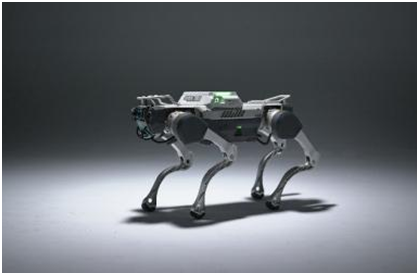
Official performance and the real operating trade-offs sit next to each other. Pure quadrupeds use multi-joint biomimetic legs. Their core job is extreme unstructured ground—walking, climbing, jumping, crawling. The X30 holds steady on slippery stairs. In firefighting it counters the recoil of high-pressure hoses through dynamic gait changes. Speed stays inside 1.5 to 5 meters per second because joint oscillation has hard limits. Energy use is steady across rubble and slopes. Multi-point contact gives high static and dynamic stability. Noise from foot impacts can be noticeable indoors. Wheeled-legged hybrids add rolling mechanisms and switch modes on their own. The Lynx M20 climbs an 80-centimeter platform. The M20S reaches 9 meters per second on flat glides. On pavement the wheels cut energy use and keep the acoustic signature low. Adaptive impedance control holds body pitch inside ±1.2 degrees over speed bumps. When stairs or slopes appear the system shifts to legged gait and keeps moving. The same platform therefore covers long flat patrols and still clears moderate obstacles.
What the data actually force is scenario matching, not brand loyalty. Pure quadrupeds fit dark, smoke-filled, signal-poor confined spaces and irregular debris fields. At a plant such as Leibstadt they climb 45-degree slopes and slip through narrow equipment gaps that people cannot reach. Wheeled-legged units fit wide municipal routes and long campus loops that are mostly flat with only scattered simple barriers. They run 24/7 preset paths and stay quiet enough for everyday community spaces. In large substation work the two already operate as a pair. Wheeled machines do the fast area scan and material runs; inspection cycles drop to one-third of the previous time. Quadrupeds then handle the precise point checks—infrared thermometry and status reads in corners the wheeled units skip. The same split appears in big-event security: wheeled platforms move through crowds and stream video; quadrupeds hold critical fixed zones and cross-check anomalies with multi-sensor data.
Single-morphology fleets leave coverage holes. A pure-legged team burns time and battery on long open stretches. A pure-wheeled team stops at the first serious rubble pile or steep stair. The practical step is to map the actual terrain mix of each site, then assign the morphology that matches the dominant surface and the dominant distance. DEEP Robotics already fields both lines—X30 quadrupeds and the Lynx M20/M20S/S10 wheeled-legged series—across more than 1,200 industrial and municipal sites. The next procurement decision should start with that map, not with a preference for legs or wheels. Measure the flat-to-obstacle ratio on the ground. Buy the mix that matches it.
Author bio: James Vance, a Silicon Valley tech director and geek analyst who has spent years inside major robotics teams dissecting locomotion trade-offs and field deployment data.